As artificial intelligence transforms the world of work, Irish classrooms have become an overlooked front line of disruption. While policymakers shape regulations and innovation frameworks, the pace of technological change is relentless – and for many educators, the ground is shifting beneath their feet.
The European Union’s new AI Act, now entering its implementation phase, has prompted urgent questions across sectors. Yet in schools, vocational training, and higher education, support for integrating AI into teaching remains patchy: structured and resourced in some institutions, but almost absent in others. Conversations in the public sphere can often be centred on regulation and risk, while educators are left asking more immediate, pragmatic questions: How do I use this in my classroom? How do I assess students fairly? What tools can I trust?
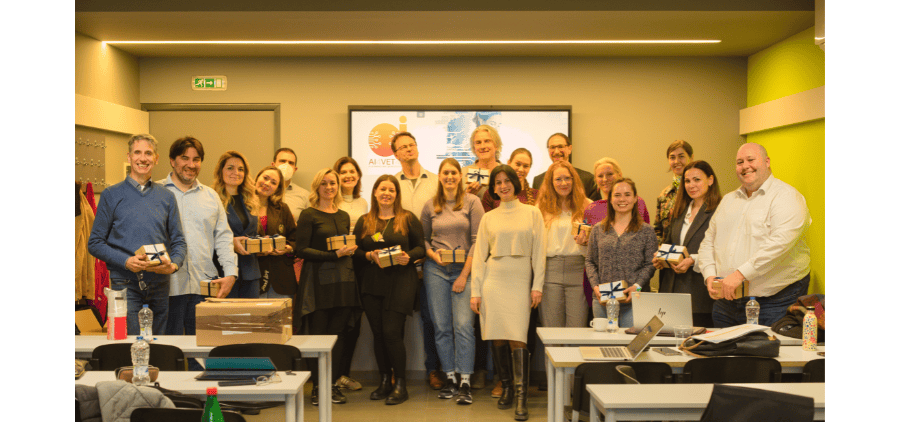
Under the AI4VET4AI project, Griffith College had the opportunity to engage with educators, administrators, and students across Ireland and Europe. What surfaced wasn’t resistance, but a shared frustration: a lack of clear, actionable guidance.
With curriculum cycles often locked into multi-year approval processes, many teachers feel caught between preserving academic rigour and staying relevant to how students best learn and prepare for work today. Dr. Kristin Finkbeiner, Deputy Programme Director in Psychology at Griffith College, encourages a more integrative perspective. “We’ve long been using AI — we just didn’t always call it that,” she notes. From digital scheduling tools to AI-powered citation managers, automation is already embedded in academic life.
Dr. Finkbeiner’s favourite use cases range from Canva and DALL·E for academic posters, to generative AI for slides and project scaffolding, to predictive models that supplement case studies in counselling and psychotherapy. “One of the most exciting applications,” she says, “is using AI for lateral reading – helping students develop fact-checking skills and quickly source new peer-reviewed literature for their research.” Yet she’s clear-eyed about its limits: “Will AI ever really be able to mimic the human relationship between therapist and client?” For Dr. Finkbeiner, the power of AI lies in its ability to support and not replace educators, helping them become “more human, not less.”
In the library, a different kind of support challenge is emerging. Rob McKenna, Head Librarian at Griffith College, uses AI tools with caution and intent – often to clean data, format citations, or generate Python scripts to manage messy bibliographies. “You can take a wall of text and say, ‘place this in a spreadsheet of author, title, year,’ and it will output a (mostly) correct sheet,” he explains. Similarly, he is also outspoken about AI’s ethical shortcomings. “The training data acquisition is unethical in the very best reading… at worst it is fraudulent, exploitative, abusive.” Beyond concerns about large language models and energy usage, McKenna warns of a deeper issue: the illusion of accuracy. “We are incredibly poor at parsing AI output for nonsense when we are not experts,” he notes that this has been a problem made worse by the rising volume of AI-generated academic content.
His vision for education in the age of AI? A shift away from surface-level breadth and a determined move towards meaningful depth. “We expect learners to read less literature and engage more deeply with what we do expect them to read.”
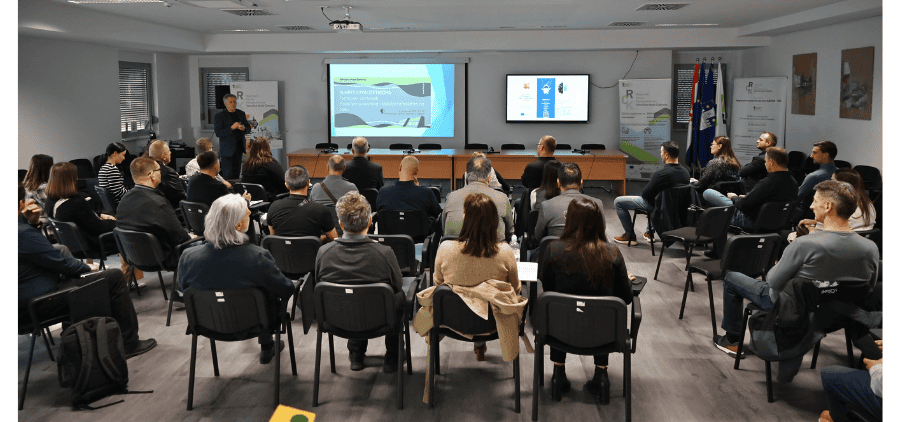
This sentiment resonates across AI workshops and conferences in the European region. Participants are consistently voicing their desire to experiment with AI use in classrooms but claim to lack structured pathways and institutional support as a product of security concerns. Technology and policy have always struggled to flourish in co-existence, one constantly outpacing or overtly blocking the other. By extension, secure infrastructures and vetted training resources are evidently lagging behind the rapid pace of AI’s evolution in education and more importantly in professional settings.
The challenge doesn’t end with formal teaching. Opeyemi Akingbohungbe, a Griffith College and Research and Innovation Hub alumnus, reflected on the disconnect between what’s taught and what’s required in today’s job market. “The AI skills I’ve picked up came after graduation,” she explained. “We talked about theory at uni, but I had to figure out the tools myself once I started working.” That gap isn’t hypothetical. It’s here.
AI4VET4AI’s mission is to close this gap by co-developing new learning pathways and teaching resources with partner institutions across Europe. But perhaps more importantly, it champions a cultural shift: one that values experimentation, tolerates discomfort, and centres the lived experiences of both educators and students in this age of redesign and implementation.
Ireland has a unique opportunity to lead. Our education sector has long punched above its weight – from inclusive pedagogy to early digital learning innovation. But to stay ahead in the era of AI-enhanced education, Ireland needs more than new software or set of policies. Ireland needs to listen to the people already doing the work in classrooms, libraries, and labs – and empower them to shape the future of learning.
The pervading question moves away from simply EU compliance. We must seek to re-inspect the relevance, fairness, and credibility of our education systems in a world where intelligence – human and artificial – is everywhere.