Artificial Intelligence in Accounting – How Much Can We Trust Its Answers?
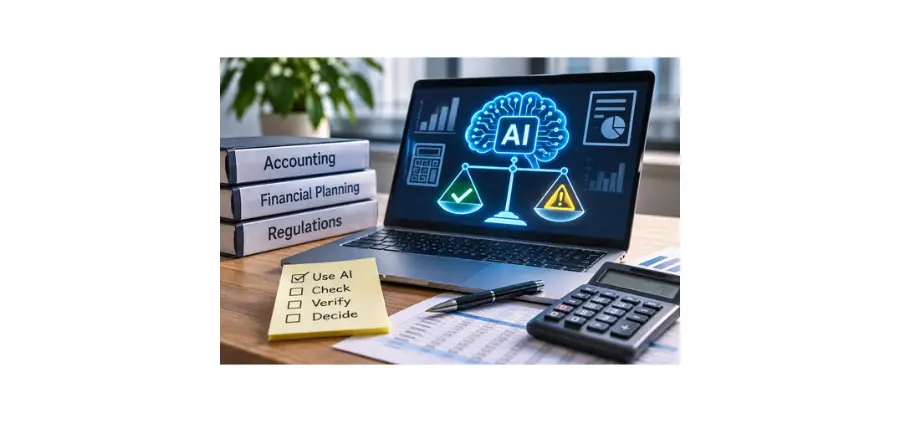
Artificial intelligence is becoming increasingly present in our everyday lives and professional activities, including accounting. It offers many opportunities to simplify tasks, analyse financial data, prepare reports and save time. However, using AI in practice also raises an important question: how reliable are the answers it provides?
When AI Helps – and When It Makes Mistakes
In accounting, accuracy is essential. Our work involves financial data, regulations, reporting requirements and decisions that can have significant consequences.
AI can be a useful tool when comparing financial information, preparing explanations or organising large amounts of data. It can make certain tasks faster and easier.
However, my experience with using AI in financial planning has also shown its limitations.
There have been situations where AI provided explanations that initially seemed logical and professionally written but were actually incorrect. In some cases, it misunderstood specific accounting rules or failed to consider the circumstances of a particular situation.
Even after providing additional information and correcting its interpretation, the answers were not always accurate.
What Happens When We Cannot Recognise a Mistake?
This experience made me think about an important issue.
When we use AI in a field we understand well, we are more likely to recognise incorrect information or questionable conclusions. Our professional knowledge allows us to identify mistakes and verify the answers.
But what happens when we use AI in an area where we have little or no expertise?
We may easily accept an incorrect answer simply because it sounds convincing.
In my opinion, this is one of the greatest risks of using artificial intelligence. AI can provide inaccurate information with the same confidence and clarity as correct information.
Why Professional Knowledge Still Matters
Artificial intelligence should be seen as a tool that supports accountants rather than replaces them.
Although AI can process information quickly, accounting requires much more than calculations. It involves understanding regulations, interpreting financial information and applying professional judgement.
Even experienced professionals cannot always recognise every mistake. This is why AI-generated information should be checked against reliable sources, current legislation and official guidance.
Preparing Students for an AI-Driven Future
As artificial intelligence becomes more common in the workplace, education must also adapt.
Students need to develop not only the skills to use AI tools but also the ability to question, evaluate and verify the information these tools provide.
This is particularly relevant to the AI4VET4AI project, which focuses on developing AI-related skills and competencies in vocational education and training.
Learning how to use artificial intelligence is important, but learning when not to trust it is equally essential.
Conclusion
Based on my experience, artificial intelligence can be a valuable assistant in accounting. It can save time, support everyday tasks and help organise complex information.
However, it should never replace professional knowledge, critical thinking or personal responsibility.
The greatest risk is not that artificial intelligence can make mistakes, but that we may not have enough knowledge to recognise them.